

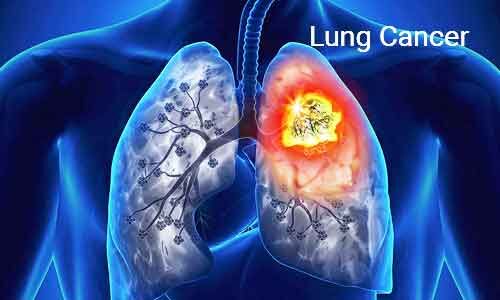
What Is Lung Cancer?
Lung cancer is a type of cancer that starts in the lungs. Cancer starts when cells in the body begin to grow out of control. To learn more about how cancers start and spread, see What Is Cancer?
Normal structure and function of the lungs
Your lungs are 2 sponge-like organs in your chest. Your right lung has 3 sections, called lobes. Your left lung has 2 lobes. The left lung is smaller because the heart takes up more room on that side of the body.
When you breathe in, air enters through your mouth or nose and goes into your lungs through the trachea (windpipe). The trachea divides into tubes called bronchi, which enter the lungs and divide into smaller bronchi. These divide to form smaller branches called bronchioles. At the end of the bronchioles are tiny air sacs known as alveoli.
The alveoli absorb oxygen into your blood from the inhaled air and remove carbon dioxide from the blood when you exhale. Taking in oxygen and getting rid of carbon dioxide are your lungs’ main functions.
Lung cancers typically start in the cells lining the bronchi and parts of the lung such as the bronchioles or alveoli.

Below the lungs, a thin, dome-shaped muscle called the diaphragm separates the chest from the abdomen. When you breathe, the diaphragm moves up and down, forcing air in and out of the lungs.
Types of lung cancer
There are 2 main types of lung cancer and they are treated very differently.
Non-small cell lung cancer (NSCLC)
About 80% to 85% of lung cancers are NSCLC. The main subtypes of NSCLC are adenocarcinoma, squamous cell carcinoma, and large cell carcinoma. These subtypes, which start from different types of lung cells are grouped together as NSCLC because their treatment and prognoses (outlook) are often similar.
Adenocarcinoma: Adenocarcinomas start in the cells that would normally secrete substances such as mucus.
This type of lung cancer occurs mainly in current or former smokers, but it is also the most common type of lung cancer seen in non-smokers. It is more common in women than in men, and it is more likely to occur in younger people than other types of lung cancer.
Adenocarcinoma is usually found in the outer parts of the lung and is more likely to be found before it has spread.
People with a type of adenocarcinoma called adenocarcinoma in situ (previously called bronchioloalveolar carcinoma) tend to have a better outlook than those with other types of lung cancer.
Squamous cell carcinoma: Squamous cell carcinomas start in squamous cells, which are flat cells that line the inside of the airways in the lungs. They are often linked to a history of smoking and tend to be found in the central part of the lungs, near the main airway (bronchus).
Large cell (undifferentiated) carcinoma: Large cell carcinoma can appear in any part of the lung. It tends to grow and spread quickly, which can make it harder to treat. A subtype of large cell carcinoma, known as large cell neuroendocrine carcinoma, is fast-growing cancer that is very similar to small cell lung cancer.
Small cell lung cancer (SCLC)
About 10% to 15% of all lung cancers are SCLC and it is sometimes called oat cell cancer.
This type of lung cancer tends to grow and spread faster than NSCLC. About 70% of people with SCLC will have cancer that has already spread at the time they are diagnosed. Since this cancer grows quickly, it tends to respond well to chemotherapy and radiation therapy. Unfortunately, for most people, cancer will return at some point.
Other types of lung tumors
Along with the main types of lung cancer, other tumors can occur in the lungs.
Lung carcinoid tumors: Carcinoid tumors of the lung account for fewer than 5% of lung tumors. Most of these grow slowly. For more information about these tumors, see Lung Carcinoid Tumor.
Other lung tumors: Other types of lung cancer such as adenoid cystic carcinomas, lymphomas, and sarcomas, as well as benign lung tumors such as hamartomas are rare. These are treated differently from the more common lung cancers and are not discussed here.
Cancers that spread to the lungs: Cancers that start in other organs (such as the breast, pancreas, kidney, or skin) can sometimes spread (metastasize) to the lungs, but these are not lung cancers. For example, cancer that starts in the breast and spreads to the lungs is still breast cancer, not lung cancer. Treatment for metastatic cancer to the lungs is based on where it started (the primary cancer site).
Lung Cancer Risk Factors
A risk factor is anything that increases a person’s chance of getting a disease such as cancer. Different cancers have different risk factors. Some risk factors, like smoking, can be changed. Others, like a person’s age or family history, can’t be changed.
But having a risk factor, or even several does not mean that you will get the disease. And some people who get the disease may have few or no known risk factors.
Several risk factors can make you more likely to develop lung cancer. These factors are related to the risk of lung cancer in general. It’s possible that some of these might not apply to small cell lung cancer (SCLC).
Risk factors you can change
Tobacco smoke
Smoking is by far the leading risk factor for lung cancer. About 80% of lung cancer deaths are thought to result from smoking and this number is probably even higher for small cell lung cancer (SCLC). It’s very rare for someone who has never smoked to have SCLC.
The risk of lung cancer for smokers is many times higher than for non-smokers. The longer you smoke and the more packs a day you smoke, the greater your risk.
Cigar smoking and pipe smoking are almost as likely to cause lung cancer as cigarette smoking. Smoking low-tar or “light” cigarettes increases lung cancer risk as much as regular cigarettes. Smoking menthol cigarettes might increase the risk even more since the menthol may allow smokers to inhale more deeply.
Secondhand smoke
If you don’t smoke, breathing in the smoke of others (called secondhand smoke or environmental tobacco smoke) can increase your risk of developing lung cancer. Secondhand smoke is thought to cause more than 7,000 deaths from lung cancer each year.
Taking certain dietary supplements
Studies looking at the possible role of vitamin supplements in reducing lung cancer risk have had disappointing results. In fact, 2 large studies found that smokers who took beta carotene supplements actually had an increased risk of lung cancer. The results of these studies suggest that smokers should avoid taking beta carotene supplements.
Arsenic in drinking water
Studies of people in parts of Southeast Asia and South America with high levels of arsenic in their drinking water have found a higher risk of lung cancer. In most of these studies, the levels of arsenic in the water were many times higher than those typically seen in the United States, even in areas where arsenic levels are above normal. For most Americans who are on public water systems, drinking water is not a major source of arsenic.
Risk factors you cannot change
Previous radiation therapy to the lungs
People who have had radiation therapy to the chest for other cancers are at higher risk for lung cancer, particularly if they smoke. Examples include people who have been treated for Hodgkin disease or women who get chest radiation after a mastectomy for breast cancer. Women who have radiation therapy to the breast after a lumpectomy do not appear to have a higher than expected risk of lung cancer.
Air pollution
In cities, air pollution (especially near heavily trafficked roads) appears to raise the risk of lung cancer slightly. This risk is far less than the risk caused by smoking, but some researchers estimate that worldwide about 5% of all deaths from lung cancer may be due to outdoor air pollution.
Personal or family history of lung cancer
If you have had lung cancer, you have a higher risk of developing another lung cancer.
Brothers, sisters, and children of people who have had lung cancer may have a slightly higher risk of lung cancer themselves, especially if the relative was diagnosed at a younger age. It’s not clear how much of this risk might be due to shared genes among family members and how much might be from shared household exposures (such as tobacco smoke or radon).
Factors with uncertain or unproven effects on lung cancer risk
Smoking marijuana
There are reasons to think smoking marijuana might increase lung cancer risk.
- Marijuana smoke contains tar and many of the same cancer-causing substances that are in tobacco smoke. (Tar is the sticky, solid material that remains after burning, which is thought to contain most of the harmful substances in smoke.)
- Marijuana cigarettes (joints) are typically smoked all the way to the end, where tar content is the highest.
- Marijuana is inhaled very deeply and the smoke is held in the lungs for a long time, which gives any cancer-causing substances more opportunity to deposit in the lungs.
- Because marijuana is still illegal in many places, it may not be possible to control what other substances it might contain.
Those who use marijuana tend to smoke fewer marijuana cigarettes in a day or week than the amount of tobacco consumed by cigarette smokers. The lesser amount smoked would make it harder to see an impact on lung cancer risk.
It’s been hard to study whether there is a link between marijuana and lung cancer because marijuana has been illegal in many places for so long, and it’s not easy to gather information about the use of illegal drugs. Also, in studies that have looked at past marijuana use in people who had lung cancer, most of the marijuana smokers also smoked cigarettes. This can make it hard to know how much any increased risk is from tobacco and how much might be from marijuana. More research is needed to know the cancer risks of smoking marijuana.
E-cigarettes
E-cigarettes are a type of electronic nicotine delivery system. They do not contain any tobacco but the Food and Drug Administration (FDA) classifies them as “tobacco” products. E-cigarettes are fairly new and more research is needed to know what the long-term effects might be, including the risk of developing lung cancer.
Talc and talcum powder
Talc is a mineral that in its natural form may contain asbestos. Some studies have suggested that talc miners and people who operate talc mills might have a higher risk of lung cancer and other respiratory diseases because of their exposure to industrial grade talc. But other studies have not found an increase in the lung cancer rate.
Talcum powder is made from talc. The use of cosmetic talcum powder has not been found to increase lung cancer risk.
What Causes Lung Cancer?
We don’t know what causes each case of lung cancer. But we do know many of the risk factors for these cancers (see Lung Cancer Risk Factors) and how some of them cause cells to become cancer.
Smoking
Smoking tobacco is by far the leading cause of lung cancer. About 80% of lung cancer deaths are caused by smoking, and many others are caused by exposure to secondhand smoke.
Smoking is clearly the strongest risk factor for lung cancer, but it often interacts with other factors. Smokers exposed to other known risk factors such as radon and asbestos are at an even higher risk. Not everyone who smokes gets lung cancer, so other factors like genetics probably play a role as well (see below).
Causes in non-smokers
Not all people who get lung cancer are smokers. Many people with lung cancer are former smokers, but many others never smoked at all. And it is rare for someone who has never smoked to be diagnosed with small cell lung cancer (SCLC), but it can happen.
Lung cancer in non-smokers can be caused by exposure to radon, secondhand smoke, air pollution, or other factors. Workplace exposures to asbestos, diesel exhaust, or certain other chemicals can also cause lung cancers in some people who don’t smoke.
A small portion of lung cancers occurs in people with no known risk factors for the disease. Some of these might just be random events that don’t have an outside cause, but others might be due to factors that we don’t yet know about.
Lung cancers in non-smokers are often different from those that occur in smokers. They tend to occur in younger people and often have certain gene changes that are different from those in tumors found in smokers. In some cases, these gene changes can be used to guide treatment.
Gene changes that may lead to lung cancer
Scientists know how some of the risk factors for lung cancer can cause certain changes in the DNA of lung cells. These changes can lead to abnormal cell growth and, sometimes, cancer. DNA is the chemical in our cells that makes up our genes, which control how our cells function. DNA, which comes from both our parents, affects more than just how we look. It also can influence our risk for developing certain diseases, including some kinds of cancer.
Some genes help control when cells grow, divide to make new cells, and die:
- Genes that help cells grow, divide, or stay alive are called oncogenes.
- Genes that help control cell division or cause cells to die at the right time are called tumor suppressor genes.
Cancers can be caused by DNA changes that turn on oncogenes or turn off tumor suppressor genes. Changes in many different genes are usually needed to cause lung cancer.
Inherited gene changes
Some people inherit DNA mutations (changes) from their parents that greatly increase their risk for developing certain cancers. But inherited mutations alone are not thought to cause very many lung cancers.
Still, genes do seem to play a role in some families with a history of lung cancer. For example, people who inherit certain DNA changes in a particular chromosome (chromosome 6) are more likely to develop lung cancer, even if they don’t smoke or only smoke a little.
Some people seem to inherit a reduced ability to break down or get rid of certain types of cancer-causing chemicals in the body, such as those found in tobacco smoke. This could put them at higher risk for lung cancer.
Other people inherit faulty DNA repair mechanisms that make it more likely they will end up with DNA changes. People with DNA repair enzymes that don’t work normally might be especially vulnerable to cancer-causing chemicals and radiation.
Some non-small cell lung cancers (NSCLCs) make too much of the EGFR protein (which comes from an abnormal EGFR gene). This specific gene change is seen more often with adenocarcinoma of the lung in young, non-smoking, Asian women, but the excess EGFR protein has also been seen in more than 60% of metastatic NSCLCs.
Researchers are developing tests that may help identify such people, but these tests are not yet used routinely. For now, doctors recommend that all people avoid tobacco smoke and other exposures that might increase their cancer risk.
Acquired gene changes
Gene changes related to lung cancer are usually acquired during life rather than inherited. Acquired mutations in lung cells often result from exposure to factors in the environment, such as cancer-causing chemicals in tobacco smoke. But some gene changes may just be random events that sometimes happen inside a cell, without having an outside cause.
Acquired changes in certain genes, such as the RB1 tumor suppressor gene, are thought to be important in the development of SCLC. Acquired changes in genes such as the p16 tumor suppressor gene and the K-RAS oncogene are thought to be important in the development of NSCLC. Changes in the TP53 tumor suppression gene and to chromosome 3 can be seen in both NSCLC and SCLC. Not all lung cancers share the same gene changes, so there are undoubtedly changes in other genes that have not yet been found.
Can Lung Cancer Be Prevented?
Not all lung cancers can be prevented. But there are things you can do that might lower your risk, such as changing the risk factors that you can control.
Stay away from tobacco
The best way to reduce your risk of lung cancer is not to smoke and to avoid breathing in other people’s smoke.
If you stop smoking before cancer develops, your damaged lung tissue gradually starts to repair itself. No matter what your age or how long you’ve smoked, quitting may lower your risk of lung cancer and help you live longer.
Avoid radon exposure
Radon is an important cause of lung cancer. You can reduce your exposure to radon by having your home tested and treated if needed.
Avoid or limit exposure to cancer-causing agents
Avoiding exposure to known cancer-causing agents, in the workplace and elsewhere, may also be helpful (see Lung Cancer Risk Factors). When people work where these exposures are common, they should be kept to a minimum.
Eat a healthy diet
A healthy diet with lots of fruits and vegetables may also help reduce your risk of lung cancer. Some evidence suggests that a diet high in fruits and vegetables may help protect both smokers and non-smokers against lung cancer. But any positive effect of fruits and vegetables on lung cancer risk would be much less than the increased risk from smoking.
Trying to reduce the risk of lung cancer in current or former smokers by giving them high doses of vitamins or vitamin-like drugs has not been successful so far. In fact, some studies have found that supplements of beta-carotene, a nutrient related to vitamin A, appear to increase the rate of lung cancer in these people.
Some people who get lung cancer do not have any clear risk factors. Although we know how to prevent most lung cancers, at this time we don’t know how to prevent all of them.
Can Lung Cancer Be Found Early?
Screening is the use of tests or exams to find a disease in people who don’t have symptoms. Regular chest x-rays have been studied for lung cancer screening, but they did not help most people live longer. In recent years, a test known as a low-dose CAT scan or CT scan (LDCT) has been studied in people at a higher risk of getting lung cancer. LDCT scans can help find abnormal areas in the lungs that may be cancer. Research has shown that using LDCT scans to screen people at higher risk of lung cancer saved more lives compared to chest x-rays. For higher-risk people, getting yearly LDCT scans before symptoms start helps lower the risk of dying from lung cancer.
Reasons to screen for lung cancer
In the United States, lung cancer is the second most common cancer in both men and women. It’s also the leading cause of death from cancer.
If lung cancer is found at an earlier stage when it is small and before it has spread, it is more likely to be successfully treated.
Usually, symptoms of lung cancer do not appear until the disease is already at an advanced stage. Even when lung cancer does cause symptoms, many people may mistake them for other problems, such as an infection or long-term effects from smoking. This may delay the diagnosis.
Current and former smokers are at a higher risk of getting lung cancer.
American Cancer Society’s guidelines for lung cancer screening
The COVID-19 pandemic has resulted in many elective procedures being put on hold, and this has led to a substantial decline in cancer screening. As your regular facility for health care returns to providing cancer screening, it’s important that it is done as safely as possible. Learn how you can talk to your doctor and what steps you can take to plan a safe return to regular cancer screening in Cancer Screening During the COVID-19 Pandemic.
The American Cancer Society (ACS) has a lung cancer screening guideline for people with a higher risk of getting lung cancer that is based on the National Lung Screening Trial (which is described below). The ACS recommends yearly lung cancer screening with LDCT scans for people who are 55 to 74 years old, are in fairly good health, and who also meet the following conditions:
- Are current smokers or smokers who have quit in the past 15 years.
- Have at least a 30 pack-year smoking history. (This is the number of years you smoked multiplied by the number of packs of cigarettes per day. For example, someone who smoked 2 packs per day for 15 years [2 x 15 = 30] has 30 pack-years of smoking. A person who smoked 1 pack per day for 30 years [1 x 30 = 30] also has 30 pack-years of smoking.)
- Receive counseling to quit smoking if they are current smokers.
- Have been told by their doctor about the possible benefits, limits, and harms of screening with LDCT scans.
- Have a facility where they can go that has experience in lung cancer screening and treatment.
Benefits of lung cancer screening
The main benefit of screening is a lower chance of dying from lung cancer, which accounts for many deaths in current and former smokers. Still, it’s important to be aware that, as with any type of screening, not everyone who gets screened will benefit. Screening with LDCT will not find all lung cancers, and not all of the cancers that are found will be found early.
Even if a cancer is found by screening, you may still die from lung cancer. Also, LDCT often finds things that turn out not to be cancer, but have to be checked out with more tests to know what they are. You might need more CT scans, or invasive tests such as a lung biopsy, in which a piece of lung tissue is removed with a needle or during surgery. These tests have risks of their own (see above).
If you are at a higher risk, your doctor can explain your risk and how the ACS lung cancer screening guideline applies to you. Your doctor can also talk with you about what happens during screening and the best places to get the yearly screening test. Lung cancer screening is covered by Medicare and by many private health insurance plans. Your health care team can help you find out if your insurance will provide coverage.
Screening should only be done at facilities that have the right type of CT scanner and that have experience in LDCT scans for lung cancer screening. The facility should also have a team of specialists that can give patients the appropriate care and follow-up if there are abnormal results on the scans. You might not have the right kind of facility nearby, so you may need to travel some distance to be screened.
If you are at higher risk and should be screened, you should get an LDCT every year until you reach the age of 74, as long as you are still in good health.
If you smoke, you should get counseling about stopping. You should be told about your risk of lung cancer and referred to a smoking cessation program. Screening is not a good alternative to stopping smoking. By quitting, smokers can lower their risk of getting and dying from lung cancer.
What does “in fairly good health” mean?
Screening is meant to find cancer in people who do not have symptoms of the disease. People who already have symptoms that might be caused by lung cancer may need tests such as CT scans to find the underlying cause, which in some cases may be cancer. But this kind of testing is for diagnosis and is not the same as screening. Some of the possible symptoms of lung cancer that kept people out of the NLST were coughing up blood and weight loss without trying.
To get the most benefit from screening, patients need to be in good health. For example, they need to be able to have surgery and other treatments to try to cure lung cancer if it is found. Patients who need home oxygen therapy probably couldn’t withstand having part of a lung removed, and so, are not candidates for screening. Patients with other serious medical problems that would shorten their lives or keep them from having surgery might not benefit enough from screening for it to be worth the risks, and so should also not be screened.
Metal implants in the chest (like pacemakers) or back (like rods in the spine) can interfere with x-rays and lead to poor quality CT images of the lungs. People with these types of implants were also kept out of the NLST, and so should not be screened with CT scans for lung cancer according to the ACS guidelines.
If something abnormal is found during screening
Sometimes screening tests will show something abnormal in the lungs or nearby areas that might be cancer. Most of these abnormal findings will turn out not to be cancer, but more CT scans or other tests will be needed to be sure. Some of these tests are described in Tests for Lung Cancer.
CT scans of the lungs can also sometimes show problems in other organs that just happen to be in the field of view of the scans. Your doctor will discuss any such findings with you if they are found.
The National Lung Screening Trial
The National Lung Screening Trial (NLST) was a large clinical trial that looked at using LDCT of the chest to screen for lung cancer. CT scans of the chest provide more detailed pictures than chest x-rays and are better at finding small abnormal areas in the lungs. A Low-dose CT of the chest uses lower amounts of radiation than a standard chest CT and does not require the use of intravenous (IV) contrast dye.
The NLST compared LDCT of the chest to chest x-rays in people at high risk of lung cancer to see if these scans could help lower the risk of dying from lung cancer. The study included more than 50,000 people ages 55 to 74 who were current or former smokers and were in fairly good health. To be in the study, they had to have at least a 30 pack-year history of smoking.
Former smokers could enter the study if they had quit within the past 15 years. The study did not include people if they had a history of lung cancer or lung cancer symptoms, if they had part of a lung removed, if they needed to be on oxygen at home to help them breathe, or if they had other serious medical problems.
People in the study got either 3 LDCT scans or 3 chest x-rays, each a year apart, to look for abnormal areas in the lungs that might be cancer. After several years, the study found that people who got LDCT had a 20% lower chance of dying from lung cancer than those who got chest x-rays. They were also 7% less likely to die overall (from any cause) than those who got chest x-rays.
Screening with LDCT was also shown to have some downsides that need to be considered.
One drawback of this test is that it also finds a lot of abnormalities that have to be checked out with more tests, but that turns out not to be cancer. (About 1 out of 4 people in the NLST had such a finding.) This may lead to additional tests such as other CT scans or more invasive tests such as needle biopsies or even surgery to remove a portion of the lung in some people. These tests can sometimes lead to complications (like a collapsed lung) or rarely, death, even in people who do not have cancer (or who have very early stage cancer).
LDCTs also exposes people to a small amount of radiation with each test. It is less than the dose from a standard CT, but it is more than the dose from a chest x-ray. Some people who are screened may end up needing further CT scans, which means more radiation exposure. When done in tens of thousands of people, this radiation may cause a few people to develop breast, lung, or thyroid cancers later on.
Lung Nodules
A lung nodule (or mass) is a small abnormal area that is sometimes found during a CT scan of the chest. These scans are done for many reasons, such as part of lung cancer screening, or to check the lungs if you have symptoms.
Most lung nodules seen on CT scans are not cancer. They are more often the result of old infections, scar tissue, or other causes. But tests are often needed to be sure a nodule is not cancer.
If you have a lung nodule
Most often the next step is to get a repeat CT scan to see if the nodule is growing over time. The time between scans might range anywhere from a few months to a year, depending on how likely your doctor thinks that the nodule could be cancer. This is based on the size, shape, and location of the nodule, as well as whether it appears to be solid or filled with fluid. If a repeat scan shows that the nodule has grown, your doctor might also want to get another type of imaging test called a positron emission tomography (PET) scan, which can often help tell if it is cancer.
If later scans show that the nodule has grown, or if the nodule has other concerning features, your doctor will want to get a sample of it to check it for cancer cells. This is called a biopsy. This can be done in different ways:
- The doctor might pass a long, thin tube (called a bronchoscope) down your throat and into the airways of your lung to reach the nodule. A small tweezer on the end of the bronchoscope can be used to get a sample of the nodule.
- If the nodule is in the outer part of the lung, the doctor might pass a thin, hollow needle through the skin of the chest wall (with the guidance of a CT scan) and into the nodule to get a sample.
- If there is a higher chance that the nodule is cancer (or if the nodule can’t be reached with a needle or bronchoscope), surgery might be done to remove the nodule and some surrounding lung tissue. Sometimes larger parts of the lung might be removed as well.
These types of tests, biopsies, and surgeries are described in more detail in Tests for Lung Cancer.
After the biopsy
After a biopsy is done, the tissue sample will be looked at closely in the lab by a doctor called a pathologist. The pathologist will check the biopsy for cancer, infection, scar tissue, and other lung problems. If cancer is found, then special tests will be done to find out what kind of cancer it is. If something other than cancer is found, the next step will depend on the diagnosis. Some nodules will be followed with a repeat CT scan in 6-12 months for a few years to make sure it does not change. If the lung nodule biopsy shows an infection, you might be sent to a specialist called an infectious disease doctor, for further testing. Your doctor will decide on the next step, depending on the results of the biopsy.
Signs and Symptoms of Lung Cancer
Most lung cancers do not cause any symptoms until they have spread, but some people with early lung cancer do have symptoms. If you go to your doctor when you first notice symptoms, your cancer might be diagnosed at an earlier stage, when treatment is more likely to be effective.
Most of these symptoms are more likely to be caused by something other than lung cancer. Still, if you have any of these problems, it’s important to see your doctor right away so the cause can be found and treated, if needed.
The most common symptoms of lung cancer are:
- A cough that does not go away or gets worse
- Coughing up blood or rust-colored sputum (spit or phlegm)
- Chest pain that is often worse with deep breathing, coughing, or laughing
- Hoarseness
- Loss of appetite
- Unexplained weight loss
- Shortness of breath
- Feeling tired or weak
- Infections such as bronchitis and pneumonia that don’t go away or keep coming back
- New onset of wheezing
- If lung cancer spreads to other parts of the body, it may cause:
- Bone pain (like pain in the back or hips)
- Nervous system changes (such as headache, weakness or numbness of an arm or leg, dizziness, balance problems, or seizures), from cancer, spread to the brain
- Yellowing of the skin and eyes (jaundice), from cancer, spread to the liver
- Swelling of lymph nodes (collection of immune system cells) such as those in the neck or above the collarbone
Some lung cancers can cause syndromes, which are groups of specific symptoms.
Horner syndrome
Cancers of the upper part of the lungs are sometimes called Pancoast tumors. These tumors are more likely to be non-small cell lung cancer (NSCLC) than small cell lung cancer (SCLC).
Pancoast tumors can affect certain nerves to the eye and part of the face, causing a group of symptoms called Horner syndrome:
- Drooping or weakness of one upper eyelid
- A smaller pupil (dark part in the center of the eye) in the same eye
- Little or no sweating on the same side of the face
Superior vena cava syndrome
The superior vena cava (SVC) is a large vein that carries blood from the head and arms down to the heart. It passes next to the upper part of the right lung and the lymph nodes inside the chest. Tumors in this area can press on the SVC, which can cause the blood to back up in the veins. This can lead to swelling in the face, neck, arms, and upper chest (sometimes with bluish-red skin color). It can also cause headaches, dizziness, and a change in consciousness if it affects the brain. While SVC syndrome can develop gradually over time, in some cases it can become life-threatening, and needs to be treated right away.
Paraneoplastic syndromes
Some lung cancers make hormone-like substances that enter the bloodstream and cause problems with distant tissues and organs, even though cancer has not spread to those places. These problems are called paraneoplastic syndromes. Sometimes these syndromes may be the first symptoms of lung cancer. Because the symptoms affect other organs, a disease other than lung cancer may first be suspected as causing them.
Paraneoplastic syndromes can happen with any lung cancer but are more often associated with SCLC. Some common syndromes include:
- SIADH (syndrome of inappropriate anti-diuretic hormone): In this condition, the cancer cells make ADH, a hormone that causes the kidneys to hold water. This lowers salt levels in the blood. Symptoms of SIADH can include fatigue, loss of appetite, muscle weakness or cramps, nausea, vomiting, restlessness, and confusion. Without treatment, severe cases may lead to seizures and coma.
- Cushing syndrome: In this condition, the cancer cells make ACTH, a hormone that causes the adrenal glands to make cortisol. This can lead to symptoms such as weight gain, easy bruising, weakness, drowsiness, and fluid retention. Cushing syndrome can also cause high blood pressure, high blood sugar levels, or even diabetes.
- Nervous system problems: SCLC can sometimes cause the body’s immune system to attack parts of the nervous system, which can lead to problems. One example is a muscle disorder called Lambert-Eaton syndrome. In this syndrome, muscles around the hips become weak. One of the first signs may be trouble getting up from a sitting position. Later, muscles around the shoulder may become weak. A less common problem is paraneoplastic cerebellar degeneration, which can cause loss of balance and unsteadiness in arm and leg movement, as well as trouble speaking or swallowing. SCLC can also cause other nervous system problems, such as muscle weakness, sensation changes, vision problems, or even changes in behavior.
- High levels of calcium in the blood (hypercalcemia), which can cause frequent urination, thirst, constipation, nausea, vomiting, belly pain, weakness, fatigue, dizziness, and confusion
- Blood clots
Again, many of these symptoms are more likely to be caused by something other than lung cancer. Still, if you have any of these problems, it’s important to see your doctor right away so the cause can be found and treated, if needed.
Tests for Lung Cancer
Some lung cancers can be found by screening, but most lung cancers are found because they are causing problems. The actual diagnosis of lung cancer is made by looking at a sample of lung cells in the lab. If you have possible signs or symptoms of lung cancer, see your doctor.
Medical history and physical exam
Your doctor will ask about your medical history to learn about your symptoms and possible risk factors. Your doctor will also examine you to look for signs of lung cancer or other health problems.
If the results of your history and physical exam suggest you might have lung cancer, more tests will be done. These could include imaging tests and/or biopsies of the lung.
Imaging tests to look for lung cancer
Imaging tests use x-rays, magnetic fields, sound waves, or radioactive substances to create pictures of the inside of your body. Imaging tests might be done for a number of reasons both before and after a diagnosis of lung cancer, including:
- To look at suspicious areas that might be cancer
- To learn how far cancer might have spread
- To help determine if treatment is working
- To look for possible signs of cancer coming back after treatment
Chest x-ray
A chest x-ray is often the first test your doctor will do to look for any abnormal areas in the lungs. If something suspicious is seen, your doctor may order more tests.
Computed tomography (CT) scan
A CT scan uses x-rays to make detailed cross-sectional images of your body. Instead of taking 1 or 2 pictures, like a regular x-ray, a CT scanner takes many pictures and a computer then combines them to show a slice of the part of your body being studied.
A CT scan is more likely to show lung tumors than routine chest x-rays. It can also show the size, shape, and position of any lung tumors and can help find enlarged lymph nodes that might contain cancer that has spread. This test can also be used to look for masses in the adrenal glands, liver, brain, and other organs that might be due to the lung cancer spread.
CT-guided needle biopsy: If a suspected area of cancer is deep within your body, a CT scan might be used to guide a biopsy needle into this area to get a tissue sample to check for cancer.
Magnetic resonance imaging (MRI) scan
Like CT scans, MRI scans show detailed images of soft tissues in the body. But MRI scans use radio waves and strong magnets instead of x-rays. MRI scans are most often used to look for possible spread of lung cancer to the brain or spinal cord.
Positron emission tomography (PET) scan
For a PET scan, a slightly radioactive form of sugar (known as FDG) is injected into the blood and collects mainly in cancer cells.
PET/CT scan: Often a PET scan is combined with a CT scan using a special machine that can do both at the same time. This lets the doctor compare areas of higher radioactivity on the PET scan with a more detailed picture on the CT scan. This is the type of PET scan most often used in patients with lung cancer.
PET/CT scans can be useful:
- If your doctor thinks cancer might have spread but doesn’t know where. They can show the spread of cancer to the liver, bones, adrenal glands, or some other organs. They are not as useful for looking at the brain or spinal cord.
- In diagnosing lung cancer, but their role in checking whether treatment is working is unproven. Most doctors do not recommend PET/CT scans for routine follow up of patients after lung cancer treatment.
Bone scan
For a bone scan, a small amount of low-level radioactive material is injected into the blood and collects mainly in abnormal areas of bone. A bone scan can help show if cancer has spread to the bones. But this test isn’t needed very often because PET scans can usually show if cancer has spread to the bones.
Tests to diagnose lung cancer
Symptoms and the results of certain tests may strongly suggest that a person has lung cancer, but the actual diagnosis is made by looking at lung cells in the lab.
The cells can be taken from lung secretions (mucus you cough up from the lungs), fluid removed from the area around the lung (thoracentesis), or from a suspicious area using a needle or surgery (biopsy). The choice of which test(s) to use depends on the situation.
Sputum cytology
A sample of sputum (mucus you cough up from the lungs) is looked at in the lab to see if it has cancer cells. The best way to do this is to get early morning samples 3 days in a row. This test is more likely to help find cancers that start in the major airways of the lung, such as squamous cell lung cancers. It might not be as helpful for finding other types of lung cancer. If your doctor suspects lung cancer, further testing will be done even if no cancer cells are found in the sputum.
Thoracentesis
If the fluid has collected around the lungs (called a pleural effusion), doctors can remove some of the fluid to find out if it is caused by cancer spreading to the lining of the lungs (pleura). The buildup might also be caused by other conditions, such as heart failure or an infection.
For thoracentesis, the skin is numbed and a hollow needle is inserted between the ribs to drain the fluid. The fluid is checked in the lab for cancer cells. Other tests of the fluid are also sometimes useful in telling a malignant (cancerous) pleural effusion from one that is not.
If a malignant pleural effusion has been diagnosed and is causing trouble breathing, thoracentesis may be repeated to remove more fluid which may help a person breathe better.
Needle biopsy
Doctors often use a hollow needle to get a small sample from a suspicious area (mass). An advantage of needle biopsies is that they don’t require a surgical incision. The drawback is that they remove only a small amount of tissue and in some cases, the amount of tissue removed might not be enough to both make a diagnosis and to perform more tests on the cancer cells that can help doctors choose anticancer drugs.
Fine needle aspiration (FNA) biopsy
The doctor uses a syringe with a very thin, hollow needle to withdraw (aspirate) cells and small fragments of tissue. An FNA biopsy may be done to check for cancer in the lymph nodes between the lungs.
Transtracheal FNA or transbronchial FNA is done by passing the needle through the wall of the trachea (windpipe) or bronchi (the large airways leading into the lungs) during bronchoscopy or endobronchial ultrasound (described below).
In some patients, an FNA biopsy is done during an endoscopic esophageal ultrasound (described below) by passing the needle through the wall of the esophagus.
Core biopsy
A larger needle is used to remove one or more small cores of tissue. Samples from core biopsies are often preferred because they are larger than FNA biopsies.
Transthoracic needle biopsy
If the suspected tumor is in the outer part of the lungs, the biopsy needle can be put through the skin on the chest wall. The area where the needle is to be inserted may be numbed with local anesthesia first. The doctor then guides the needle into the area while looking at the lungs with either fluoroscopy (which is like an x-ray) or a CT scan.
A possible complication of this procedure is that air may leak out of the lung at the biopsy site and into the space between the lung and the chest wall. This is called a pneumothorax. It can cause part of the lung to collapse and sometimes trouble to breathe. If the air leak is small, it often gets better without any treatment. Large air leaks are treated by inserting a chest tube (a small tube into the chest space) which sucks out the air over a day or two, after which it usually heals on its own.
Bronchoscopy
Bronchoscopy can help the doctor find some tumors or blockages in the larger airways of the lungs, which can often be biopsied during the procedure.
Tests to find lung cancer spread in the chest
If lung cancer has been found, it’s often important to know if it has spread to the lymph nodes in the space between the lungs (mediastinum) or other nearby areas. This can affect a person’s treatment options. Several types of tests can be used to look for this cancer spread.
Endobronchial ultrasound
An endobronchial ultrasound can be used to see the lymph nodes and other structures in the area between the lungs if biopsies need to be taken in those areas.
Endoscopic esophageal ultrasound
An endoscopic esophageal ultrasound goes down into the esophagus where it can show the nearby lymph nodes which may contain lung cancer cells. Biopsies of the abnormal lymph nodes can be taken at the same time as the procedure.
Mediastinoscopy and mediastinotomy
These procedures may be done to look more directly at and get samples from the structures in the mediastinum (the area between the lungs). The main difference between the two is in the location and size of the incision.
A mediastinoscopy is a procedure that uses a lighted tube inserted behind the sternum (breast bone) and in front of the windpipe to look at and take tissue samples from the lymph nodes along the windpipe and the major bronchial tube areas. If some lymph nodes can’t be reached by mediastinoscopy, a mediastinotomy may be done so the surgeon can directly remove the biopsy sample. For this procedure, a slightly larger incision (usually about 2 inches long) between the left second and third ribs next to the breast bone is needed.
Thoracoscopy
Thoracoscopy can be done to find out if cancer has spread to the spaces between the lungs and the chest wall, or to the linings of these spaces. It can also be used to sample tumors on the outer parts of the lungs as well as nearby lymph nodes and fluid and to assess whether a tumor is growing into nearby tissues or organs. This procedure is not often done just to diagnose lung cancer unless other tests such as needle biopsies are unable to get enough samples for the diagnosis. Thoracoscopy can also be used as part of the treatment to remove part of a lung in some early-stage lung cancers. This type of operation, known as video-assisted thoracic surgery (VATS), is described in Surgery for Non-Small Cell Lung Cancer.
Lung function tests
Lung (or pulmonary) function tests (PFTs) are often done after lung cancer is diagnosed to see how well your lungs are working. This is especially important if surgery might be an option in treating cancer. Surgery to remove lung cancer may mean removing part or all of a lung, so it’s important to know how well your lungs are working beforehand. Some people with poor lung function (like those with lung damage from smoking) don’t have enough undamaged lungs to withstand removing even part of a lung. These tests can give the surgeon an idea of whether surgery is a good option, and if so, how much lung can safely be removed.
There are different types of PFTs, but they all basically have you breathe in and out through a tube that is connected to a machine that measures airflow.
Sometimes PFTs are coupled with a test called an arterial blood gas. In this test, blood is removed from an artery (instead of from a vein, like most other blood tests) so the amount of oxygen and carbon dioxide can be measured.
Lab tests of biopsy and other samples
Samples that have been collected during biopsies or other tests are sent to a pathology lab. A pathologist, a doctor who uses lab tests to diagnose diseases such as cancer, will look at the samples and may do other special tests to help better classify cancer. (Cancers from other organs also can spread to the lungs. It’s very important to find out where cancer started because treatment is different depending on the type of cancer.)
The results of these tests are described in a pathology report, which is usually available within a week. If you have any questions about your pathology results or any diagnostic tests, talk to your doctor. If needed, you can get a second opinion of your pathology report by having your tissue samples sent to a pathologist at another lab.
Molecular tests for gene changes
In some cases, especially for non-small cell lung cancer (NSCLC), doctors may look for specific gene changes in the cancer cells that could mean certain targeted drugs might help treat the cancer. For example:
- EGFR is a protein that appears in high amounts on the surface of 10% to 20% of NSCLC cells and helps them grow. Some drugs that target EGFR can be used to treat NSCLC with changes in the EGFR gene, which are more common in certain groups, such as non-smokers, women, and Asians. But these drugs don’t seem to be as helpful in patients whose cancer cells have changes in the KRAS gene. Doctors now test NSCLC cells for changes in genes such as EGFR and KRAS to determine if these newer treatments are likely to be helpful.
- About 5% of NSCLCs have a change in the ALK gene. This change is most often seen in non-smokers (or light smokers) who have the adenocarcinoma subtype of NSCLC. Doctors may test cancers for changes in the ALK gene to see if drugs that target this change may help them.
- About 1% to 2% of NSCLCs have a rearrangement in the ROS1 gene, which might make the tumor respond to certain targeted drugs.
- A small percentage of NSCLCs have changes in the RET gene. Certain drugs that target cells with RET gene changes might be options for treating these tumors.
- About 5% of NSCLCs have changes in the BRAF gene. Certain drugs that target cells with BRAF gene changes might be an option for treating these tumors.
- A small percentage of NSCLCs have certain changes in the MET gene that make them more likely to respond to some targeted drugs.
These molecular tests can be done on tissue taken during a biopsy or surgery for lung cancer. If the biopsy sample is too small and all the molecular tests cannot be done, the testing may also be done on blood that is taken from a vein just like a regular blood draw. This blood contains the DNA from dead tumor cells found in the bloodstream of people with advanced lung cancer. Obtaining the tumor DNA through a blood draw is sometimes called a "liquid biopsy" and can have advantages over a standard needle biopsy, which can carry risks like a pneumothorax (lung collapse) and shortness of breath.
Tests for certain proteins on tumor cells
Lab tests might also be done to look for certain proteins on the cancer cells. For example, NSCLC cells might be tested for the PD-L1 protein, which can show if the cancer is more likely to respond to treatment with certain immunotherapy drugs.
Blood tests
Blood tests are not used to diagnose lung cancer, but they can help to get a sense of a person’s overall health. For example, they can be used to help determine if a person is healthy enough to have surgery.
A complete blood count (CBC) looks at whether your blood has normal numbers of different types of blood cells. For example, it can show if you are anemic (have a low number of red blood cells), if you could have trouble with bleeding (due to a low number of blood platelets), or if you are at increased risk for infections (because of a low number of white blood cells). This test could be repeated regularly during treatment, as many cancer drugs can affect blood-forming cells of the bone marrow.
Blood chemistry tests can help find abnormalities in some of your organs, such as the liver or kidneys. For example, if cancer has spread to the bones, it might cause higher than normal levels of calcium and alkaline phosphatase.


0 Comments